THE MIRROR
OF
LITERATURE, AMUSEMENT, AND INSTRUCTION.
| Vol. 19. No. 545. | SATURDAY, MAY 5, 1832 | [PRICE 2d. |
ZOOLOGICAL GARDENS, REGENTS'S PARK.
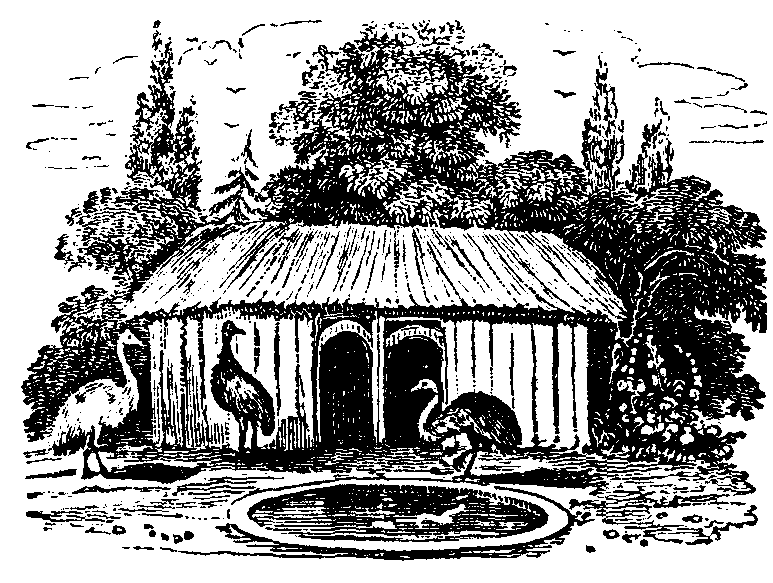 Emu Enclosure
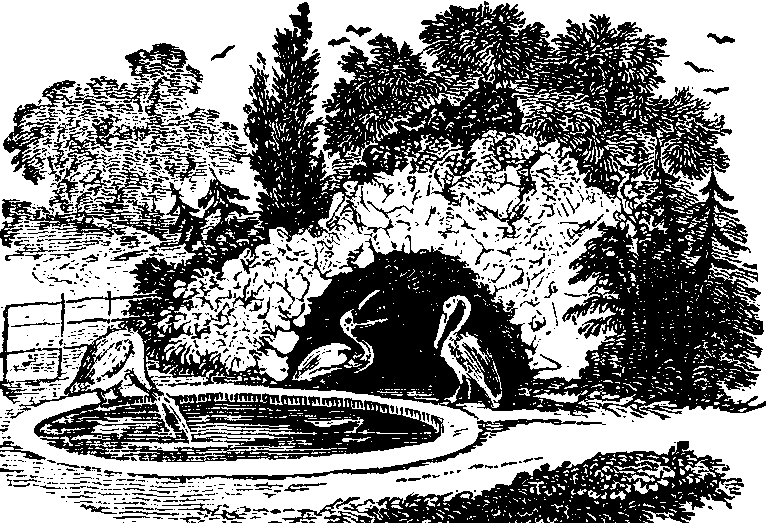 Pelican Enclosure
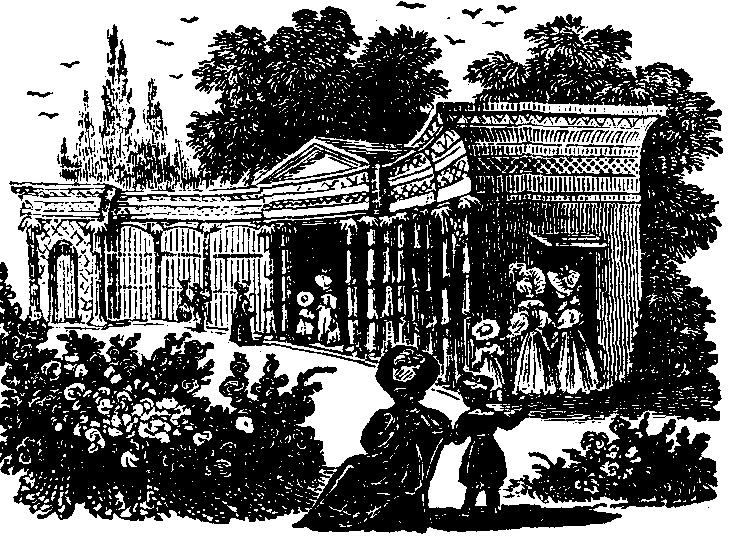 Aviary for Small Birds
Our strolls to this scene of intellectual amusement, (or "thegardens with a long name," as Lord Mulgrave's new heroine naivelycalls them,) are neither few nor far between. The acquaintance isof some standing, since The Mirror was the first journalthat contained any pictorial representation of these Gardens, orany connected notice of the animals.1 At thattime the Society had not published their "List," and our twopennyguide was common in the hands of visiters. We do not ask for thethanks of the Council in contributing to their annual receipts, nowusually amounting to £10,000.: we were studying the interestof our readers, which uniformly brings its own reward. The first ofthe present illustrations is the Emu Enclosure, in the oldGarden. Several broods of Emus have been reared by theSociety at their Farm at Kingston Hill; and some of the year'sbirds are usually exhibited here. Next is the PelicanEnclosure, containing a house of mimic rock-work, and acapacious tank of water, the favourite element of the Pelican. Onepair in mature plumage, and a second pair, supposed to be the youngof the same species, are exhibited. The third Cut is the Aviaryfor small and middle-sized birds, at the north-eastern cornerof the Garden. Here are kept various British Birds, as thedifferent species of Crows and Song Birds. The bamboo ornaments ofthe building are not, therefore, of the appropriate character thatwe so much admire elsewhere in the Gardens.
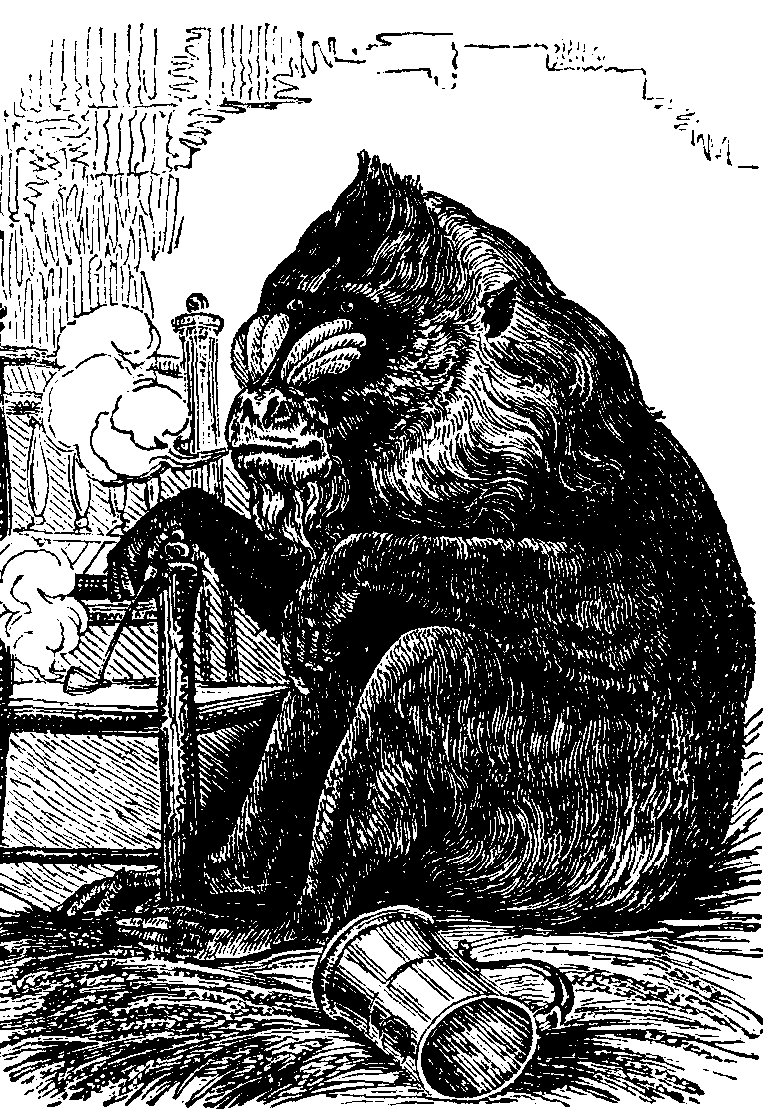 "Happy Jerry"
The individual with this felicitous soubriquet, was aspecimen of the great Mandrill Baboon, in its adult state, thePapio Maimon of Geoffrey, and the Cynocephalus Maimonof Desmarest. It is a native of the Gold Coast and Guinea, inAfrica, where whole droves of them often plunder the orchards andvineyards. Their colours are greyish brown, inclining to oliveabove; the cheeks are blue and furrowed, and the ch