THE STRANGE STORY OF RAB RÁBY
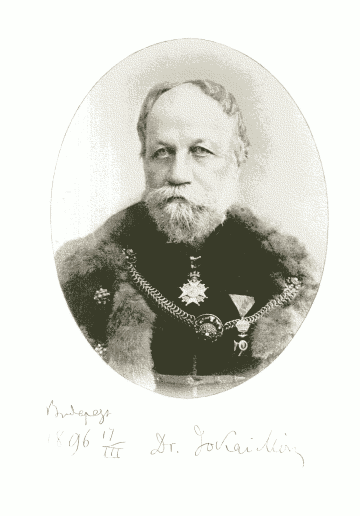
DR. MAURUS JÓKAI'S
MORE FAMOUS WORKS
(Authorised Translations).
LIBRARY EDITION.
6/- each.
NEW POPULAR EDITION.
2/6 Net each.
London: JARROLD & SONS.
THE STRANGE STORY
OF RAB RÁBY
BY
MAURUS JÓKAI
THIRD EDITION
LONDON
JARROLD & SONS, 10 & 11, WARWICK LANE, E.C.
[All Rights Reserved.]
PREFACE
TO JÓKAI'S "RAB RÁBY," IN ENGLISH,
By Dr. Emil Reich.
In "Rab Ráby," the famous Hungarian novelist gives us, in a manner quitehis own, a picture of the "old régime" in Hungary in the times ofEmperor Joseph II., 1780-1790. The novel, as to its plot and principalpersons, is based on facts, and the then manners and institutions ofHungary are faithfully reflected in the various scenes from private,judicial, and political life as it developed under the erroneous policyof Joseph II.
Briefly speaking, "Rab Ráby" is the story of one of those frightfulmiscarriages of justice which at all times cropped up under theinfluence of political motives. In our own time we have seen the Dreyfuscase, another instance of appalling injustice set in motion forpolitical reasons. "Rab Ráby" is thus very likely to give the Englishreader a wrong idea of the backward and savage character of Hungariancivilisation towards the end of the eighteenth century, unless hecarefully considers the peculiar circumstances of the case. I think Ican do the novel no better service than setting it in its righthistoric frame, which Jókai, writing as he did for Hungarians, did notfeel induced to dwell upon.
The Hungarians, alone of all Continental nations, have a politicalConstitution of their own, the origin of which goes back to an age priorto Magna Charta in England. Outside Hungary, it is generally believedthat Hungary is a mere annex of "Austria"; and the average Englishman inparticular is much surprised to hear that "Austria" i