THE MOTH AND THE FLAME
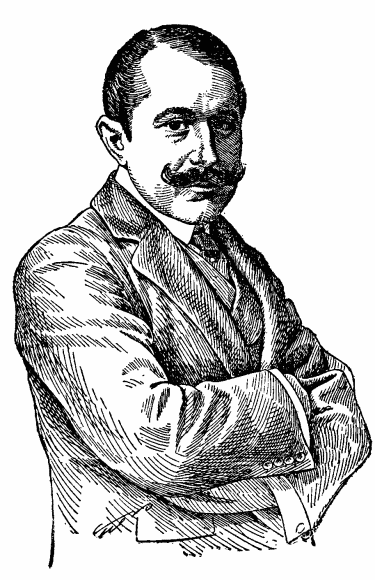
CLYDE FITCH
(1865-1909)
Clyde Fitch brought a vivacity to the American stage that noother American playwright has thus far succeeded in emulating.The total impression of his work leads one to believe that he alsobrought to the American stage a style which was at the sametime literary and distinctly his own. His personality was interestingand lovable, quickly responsive to a variety of humannature. No play of his was ever wholly worthless, because of thatpersonal equation which lent youth and spontaneity to much ofhis dialogue. When he attained popular fame, he threw off hisdramas—whether original or adapted from the French andGerman—with a rapidity and ease that did much to create afalse impression as to his haste and casualness. But Fitch,though a nervously quick worker, was never careless. He ponderedhis dramas long, he carried his characters in mind foryears, he almost memorized his dialogue before he set it down onpaper. And if he wrote in his little note-books with the samestaccato speed that an artist sketches, it was merely because hesaw the picture vividly, and because the preliminaries had beendone beforehand.
The present Editor was privileged to know Fitch as a friend.And to be taken into the magic circle was to be given freely ofthat personal equation which made his plays so personal. Thisassociation was begun over a negative criticism of a play. Aninvitation followed to come and talk it over in his Fortieth Streetstudy, the same room which—decorations, furniture, books andall—was bequeathed to Amherst College, and practically reproducesthere the Fitchean flavour.
I have seen Clyde Fitch on many diverse occasions. Throughincisive comment on people, contemporary manners, and plays,which was let drop in conversation, I was able to estimate thenatural tendency of Fitch's mind. His interest was never concernedsolely with dominant characters; he was quick rather tosense the idiosyncrasies of the average person. His observation[Pg 524]was caught by the seemingly unimportant, but no less identifyingpeculiarities of the middle class. Besides which, his irony wasnever more happy than when aimed against that social set whichhe knew, and good-humouredly satirized.
To know Clyde Fitch intimately—no matter for how short awhile—was to be put in possession of his real self. From earlyyears, he showed the same tendencies which later developed morefully, but were not different. Success gave him the money togratify his tastes for objets d'art, which he used to calculate closelyto satisfy in the days when "Beau Brummell" and "FrédéricLemaître" gave hint of his dramatic talent. He was a man ofdeep sentiment, shown to his friends by the countless gracefulacts as host, and shown to his players. As soon as a Fitch playbegan to be a commodity, coveted by the theatrical manager, henearly always had personal control of its production, and coulddictate who should be in his casts. No dramatist has left behindhim more profoundly pleasing memories of artistic associationthan Clyde Fitch. The names of his plays form a roster of stageassociations—the identification of "Beau Brummell" with RichardMansfield; of "Nathan Hale" with N. C. Goodwin; of "BarbaraFrietchie" with Julia Marlowe; of "The