SPECIAL AUTHORISED EDITION
IN LOVE WITH THE
CZARINA
AND OTHER STORIES
BY
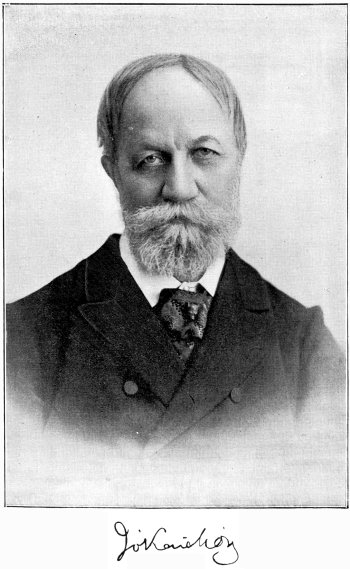
MAURICE JÓKAI
TRANSLATED FROM THE ORIGINAL HUNGARIAN
WITH THE AUTHOR'S SPECIAL PERMISSION
BY
LOUIS FELBERMANN
AUTHOR OF "HUNGARY AND ITS PEOPLE"
ETC.
LONDON
FREDERICK WARNE & CO.
AND NEW YORK
[All rights reserved]
CONTENTS
| PAGE | |
| Introduction | 9 |
| In Love with the Czarina | 17 |
| Tamerlan the Tartar | 57 |
| Valdivia | 111 |
| Bizeban | 141 |
| The Moonlight Somnambulist | 151 |
DEDICATED TO
HUNGARY'S GREATEST WRITER
MAURICE JÓKAI
BY LOUIS FELBERMANN
"From him I took it; to him I give it"
EASTERN PROVERB
London 1894
INTRODUCTION
The entire Hungarian nation—king and people—have recently beencelebrating the jubilee of Hungary's greatest writer, Maurice Jókai,whose pen, during half a century of literary activity, has given no lessthan 250 volumes to the world. Admired and beloved by his patrioticfellow-countrymen, Jókai has displayed that kind of genius whichfascinates the learned and unlearned alike, the old and the young. Heenchants the children of Hungary by his fairy-tales, and as they grow upinto men and women he implants within them a passion for their nativeland and a knowledge of its splendid history such as only his poetic anddramatic pen could engrave upon their memory. His versatility oftalent—for, besides being the Hungarian poet-laureate, he is anovelist, playwright, historian, and orator—enables the Hungarians tosee in him their Heine, their Byron, their Walter Scott, and theirVictor Hugo.
Jókai began his career at a period when Hungary aspired to politicalfreedom, and his powerful pen,[Pg 10] in combination with that of his familiarfriend, Alexander Petőfi, Hungary's greatest lyric poet, was mainlyinstrumental in rousing the nation to arms. In 1849, when the Hungariannation had sustained a cruel defeat, it was Jókai who c